Motor Talk Monday: Understanding Motor Insulation Classes
Electric motor insulation plays an important role in protecting motor windings and supporting reliable operation. However, not all insulation systems have the same temperature ratings. Understanding these differences can help when evaluating motor specifications, operating conditions, and long-term reliability.
This week, we’re breaking down motor insulation classes, what their temperature ratings mean, and how they relate to motor performance.
What Are Motor Insulation Classes?
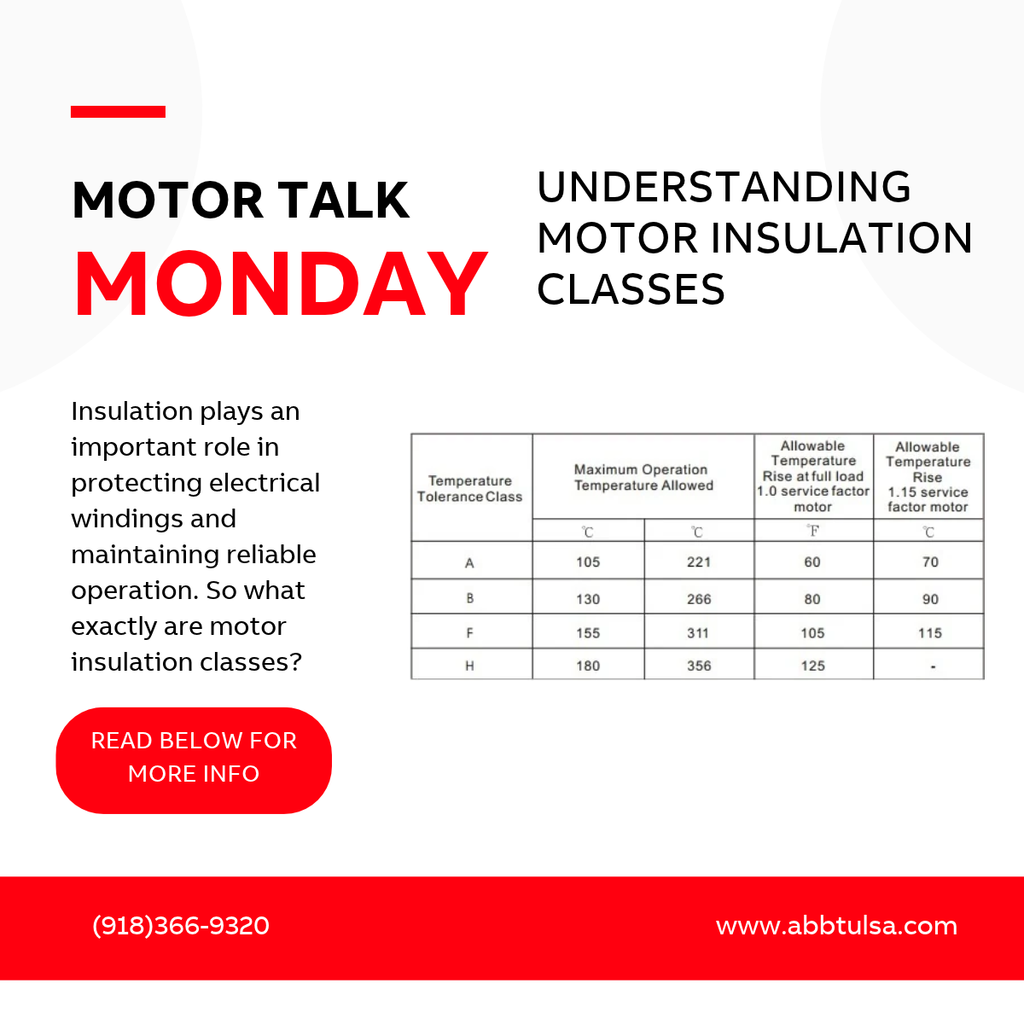
Motor insulation classes identify the thermal ratings of electrical insulation systems based on their resistance to thermal aging. These ratings indicate the maximum temperatures that insulation systems are designed to withstand under specified conditions.
Four commonly recognized insulation classes include:
- Class A: 105°C (221°F)
- Class B: 130°C (266°F)
- Class F: 155°C (311°F)
- Class H: 180°C (356°F)
These values represent the temperature ratings of the insulation systems, not the motors’ normal operating temperatures.
For example, a motor with Class F insulation has an insulation system rated for temperatures up to 155°C. However, this does not mean the motor normally operates at that temperature.
Insulation Class vs. Temperature Rise
Although insulation class and temperature rise are closely related, they describe different characteristics of motor operation.
Insulation class defines the thermal rating of the insulation system. Meanwhile, temperature rise describes how much the winding temperature increases above the surrounding cooling medium during operation.
When evaluating motor temperatures, three factors are particularly important:
- Ambient temperature: The temperature of the surrounding environment.
- Temperature rise: The increase in winding temperature resulting from motor operation.
- Hot spot allowance: An allowance that accounts for portions of the winding that may operate at higher temperatures than the measured average.
Together, these factors help determine whether a motor operates within its insulation system’s thermal limits.
Why Class F Insulation with Class B Temperature Rise Matters
Many industrial motors use Class F insulation while operating within Class B temperature rise limits.
Under common NEMA rating conditions, Class B temperature rise corresponds to an 80°C rise measured by resistance. With a standard 40°C ambient temperature and a 10°C hot spot allowance, the resulting maximum winding hot spot temperature is 130°C.
However, Class F insulation has a temperature rating of 155°C. This difference provides an additional 25°C of thermal margin between the Class B operating temperature limit and the Class F insulation rating.
That additional margin can help support longer insulation life under normal operating conditions. It may also provide some thermal protection when operating conditions become more demanding.
Importantly, this does not mean a motor can exceed its specified operating limits without consequences. Motor loading, ambient temperature, and other application conditions must still remain within the manufacturer’s ratings.
How Temperature Affects Insulation Life
Heat is one of the primary factors contributing to insulation deterioration. As operating temperatures increase, the insulation system generally ages more quickly.
The Cowern Papers discuss a commonly used rule of thumb: For approximately every 10°C increase in operating temperature, insulation life may be reduced by half. Conversely, reducing operating temperature by approximately 10°C may double insulation life.
While this relationship is an approximation rather than a guaranteed prediction, it highlights the importance of managing motor temperatures.
Several operating conditions can contribute to elevated motor temperatures, including excessive loading, inadequate cooling, high ambient temperatures, and electrical supply problems. By maintaining appropriate operating conditions, facilities can help reduce thermal stress and support longer motor life.
Why Understanding Insulation Classes Matters
Insulation class is just one consideration when selecting or evaluating an electric motor. However, understanding its relationship to temperature rise can provide valuable insight into a motor’s thermal capabilities.
A higher insulation class does not automatically mean a motor will operate at a lower temperature or provide better performance. Instead, the insulation system must be considered alongside the motor’s design, temperature rise, and intended application.
Ultimately, maintaining operating temperatures within the motor’s specified limits helps protect winding insulation, reduce the risk of premature failure, and support long-term reliability.