#MotorTalkMonday – 2027 DOE motor efficiency standards
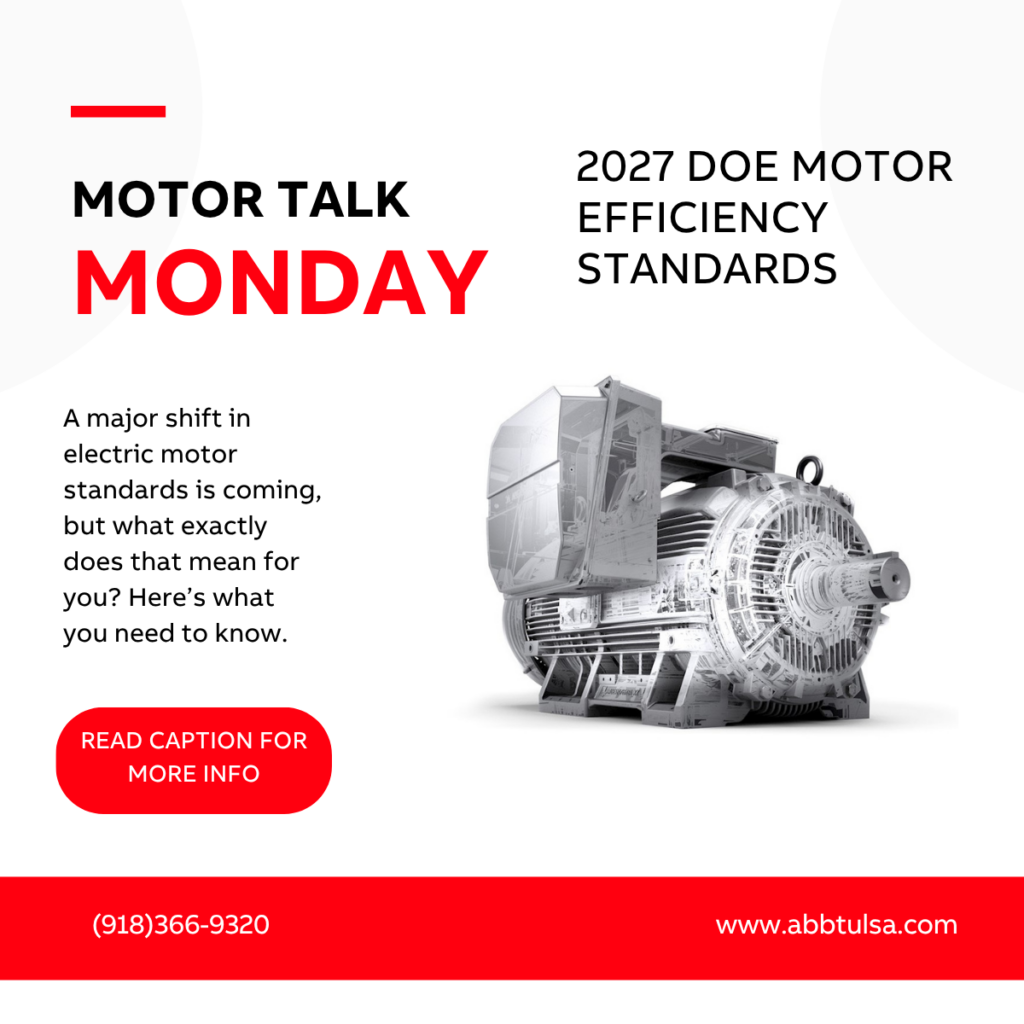
Big changes are coming to electric motors in 2027, and they’re all about efficiency.
Starting June 1, 2027, the U.S. Department of Energy (DOE) will increase minimum efficiency requirements for many electric motors. At the same time, the rule will expand which motors fall under regulation.
So, what does that actually mean?
What Is Changing in 2027?
The updated DOE standards focus on two main areas: higher efficiency and broader coverage.
Here’s a quick breakdown:
- Higher efficiency levels: Many motors will move toward Super Premium (IE4) efficiency
- Expanded scope: More motor types and horsepower ranges will now be included
- Closer alignment with global standards: U.S. requirements are moving closer to IEC efficiency levels
As a result, manufacturers will need to meet stricter performance targets across a wider range of products.
Why These Changes Matter
Electric motors account for a large share of industrial energy use. Because of that, even small efficiency gains can reduce operating costs over time.
This is especially true for motors that run continuously. Over the life of the equipment, improved efficiency can make a noticeable difference in energy consumption.
What This Means for Your Operation
Although the rule applies to manufacturers, it will still affect end users over time.
Here’s what to expect:
- Higher efficiency will become the standard: New motors will be built to higher efficiency levels by default
- Some older designs may become harder to find: Lower-efficiency models may be phased out
- Costs and lead times may shift: Manufacturers will adjust designs, production, and inventory
Because of this, planning ahead can help avoid unexpected challenges.
Do You Need to Replace Existing Motors?
No. There is no requirement to replace motors that are already in service.
The 2027 DOE standards apply to motor manufacturers—not end users. You can continue operating your current equipment as-is.
However, any new motors manufactured or sold after June 1, 2027 must meet the updated efficiency requirements.
What Should You Do Now?
You don’t need to take immediate action. However, this is a good time to look ahead.
Consider:
- Reviewing specifications for future projects
- Evaluating higher-efficiency options for key applications
- Planning for long-term availability of replacement motors
Taking a proactive approach now can help you stay ahead of upcoming changes.
Final Thoughts
The 2027 DOE standards are not forcing immediate upgrades. However, they will shape what motors are available moving forward.
Understanding these changes now can help you make better decisions down the road—and avoid surprises when the new standards take effect.