Why Are 3-Phase Motors More Efficient Than Single-Phase Motors?
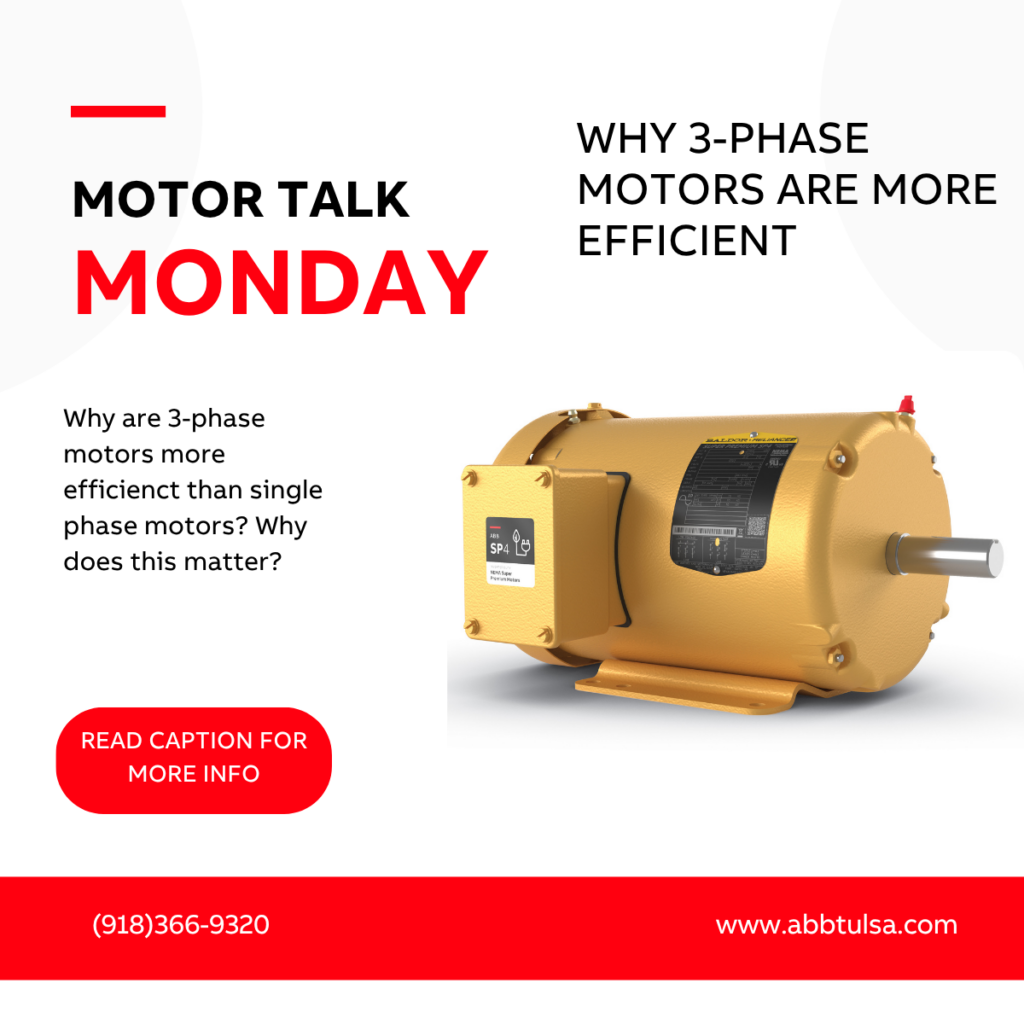
When selecting an electric motor, efficiency plays a major role. One of the most common questions we hear is why 3-phase motors are more efficient than single-phase motors. The answer comes down to how power is delivered and how the motor operates.
Continuous Power vs. Pulsed Power
A 3-phase motor receives power from three alternating currents that are evenly spaced. This creates a continuous and consistent flow of energy. As a result, the motor runs smoothly with minimal energy loss.
In contrast, a single-phase motor receives power in pulses. Because of this, the motor experiences dips in torque and efficiency during operation.
Naturally Rotating Magnetic Field
3-phase motors naturally generate a rotating magnetic field. This allows the motor to start and run without additional components.
Single-phase motors, however, require starting mechanisms such as capacitors or auxiliary windings. These added components increase complexity and can reduce overall efficiency.
Improved Performance and Reliability
Because of their design, 3-phase motors offer several performance advantages:
- Smoother operation with less vibration
- Higher starting torque
- Lower maintenance requirements
- Better efficiency under load
These benefits make them a strong choice for industrial environments where uptime is critical.
Where Single-Phase Motors Fit
Single-phase motors are still widely used in residential and light commercial applications. They are typically more practical where only single-phase power is available.
However, for most industrial applications, 3-phase motors provide better efficiency, reliability, and long-term value.