
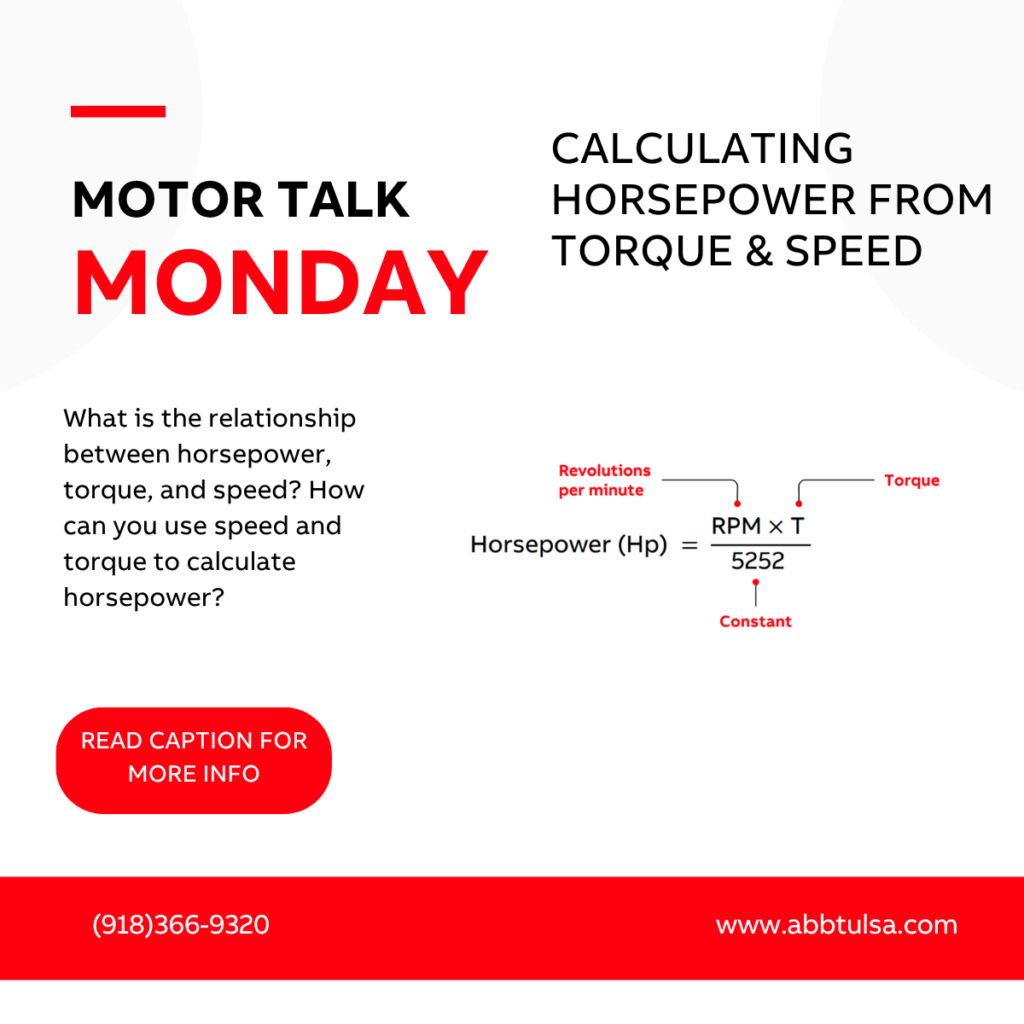
#MotorTalkMonday – calculating horsepower from torque & speed
When selecting or evaluating a motor, it is important to understand how torque and speed combine to produce horsepower. These values are often listed separately, but their relationship defines actual motor output.
The Horsepower Formula
Where:
- Torque is measured in pound-feet (lb-ft)
- RPM is the rotational speed
This equation provides a straightforward way to calculate mechanical output power.
Why This Matters
First, horsepower increases as speed increases, assuming torque remains constant. Likewise, if speed decreases, HP drops—even if torque does not change.
Because of this, both variables must be considered when:
- Sizing a motor for a specific load
- Evaluating system performance
- Troubleshooting underperforming equipment
A Key Detail: 5252 RPM
You may notice that torque and horsepower curves often intersect at 5252 RPM. This is not a coincidence. It comes directly from the equation and is a useful reference point when reviewing performance curves.
Practical Takeaway
In real-world applications, torque and speed rarely stay constant. Loads vary, and operating conditions shift. Therefore, understanding how these two factors interact helps ensure you select the right motor and avoid unexpected downtime.