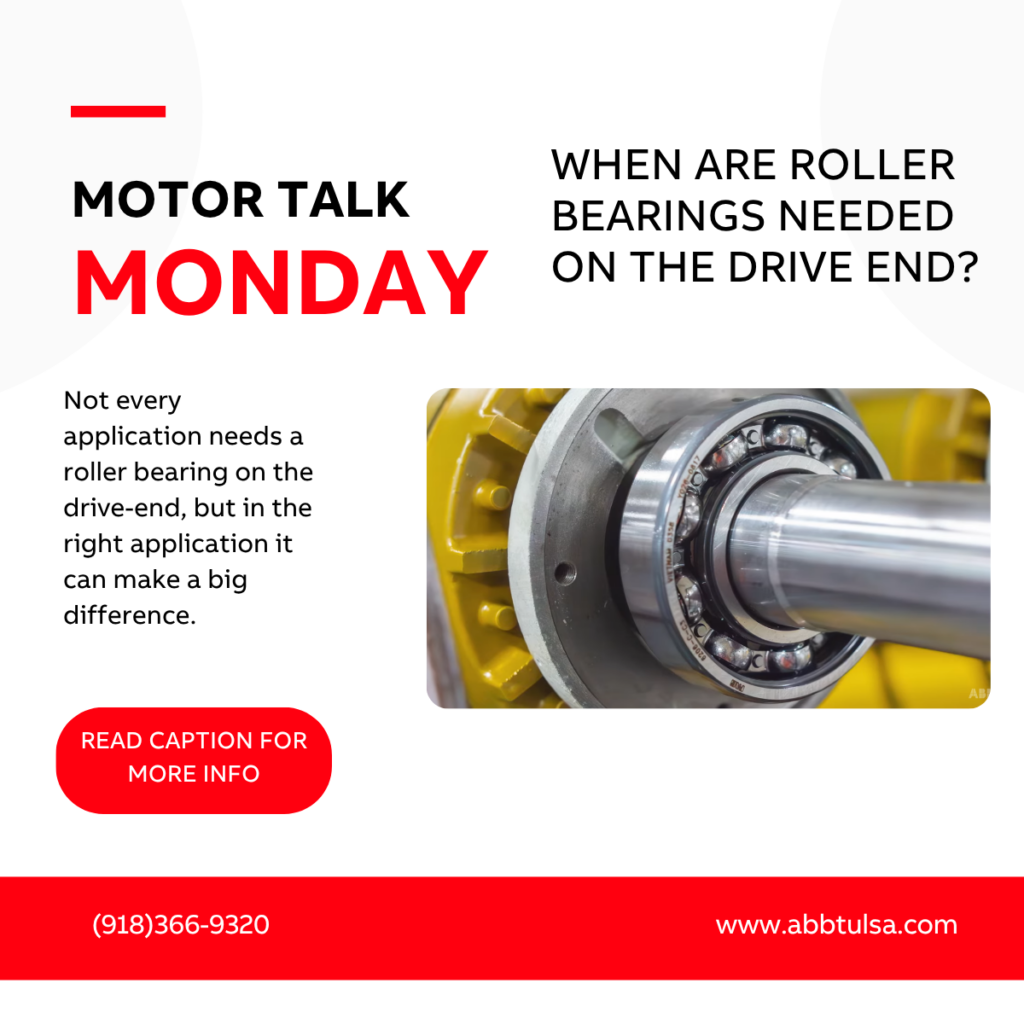
#MotorTalkMonday – when are roller bearings needed on the drive end?
Not every motor application requires a roller bearing on the drive end. However, in the right application, the correct bearing configuration can significantly improve reliability and bearing life.
One of the most common situations where a drive-end roller bearing is used is in belted applications with high radial loads.
Why Belted Applications Matter
When a motor drives equipment through belts, belt tension creates radial force on the motor shaft. In some applications, standard ball bearings may not be the best choice for handling these loads over time.
That is where roller bearings can help.
How Roller Bearings Differ from Ball Bearings
Roller bearings provide a larger contact area than standard ball bearings. Because of this design, they are better suited for handling heavy radial loads.
Drive-end roller bearings are commonly used in applications such as:
- Belt-driven fans and blowers
- Heavy conveyor systems
- Crushers and grinders
- Applications with high belt tension
These applications can place significant overhung load on the motor shaft, making proper bearing selection important.
Proper Application Is Important
Although roller bearings handle radial loads very well, they are generally not designed for significant thrust loading.
Because of that, application details should always be reviewed carefully when selecting a motor bearing configuration. Factors such as belt tension, overhung load, and application type all play a role.
Using the correct bearing setup can help improve motor reliability, extend bearing life, and reduce unexpected downtime.
For applications with higher radial loading, a drive-end roller bearing may be the right solution.