
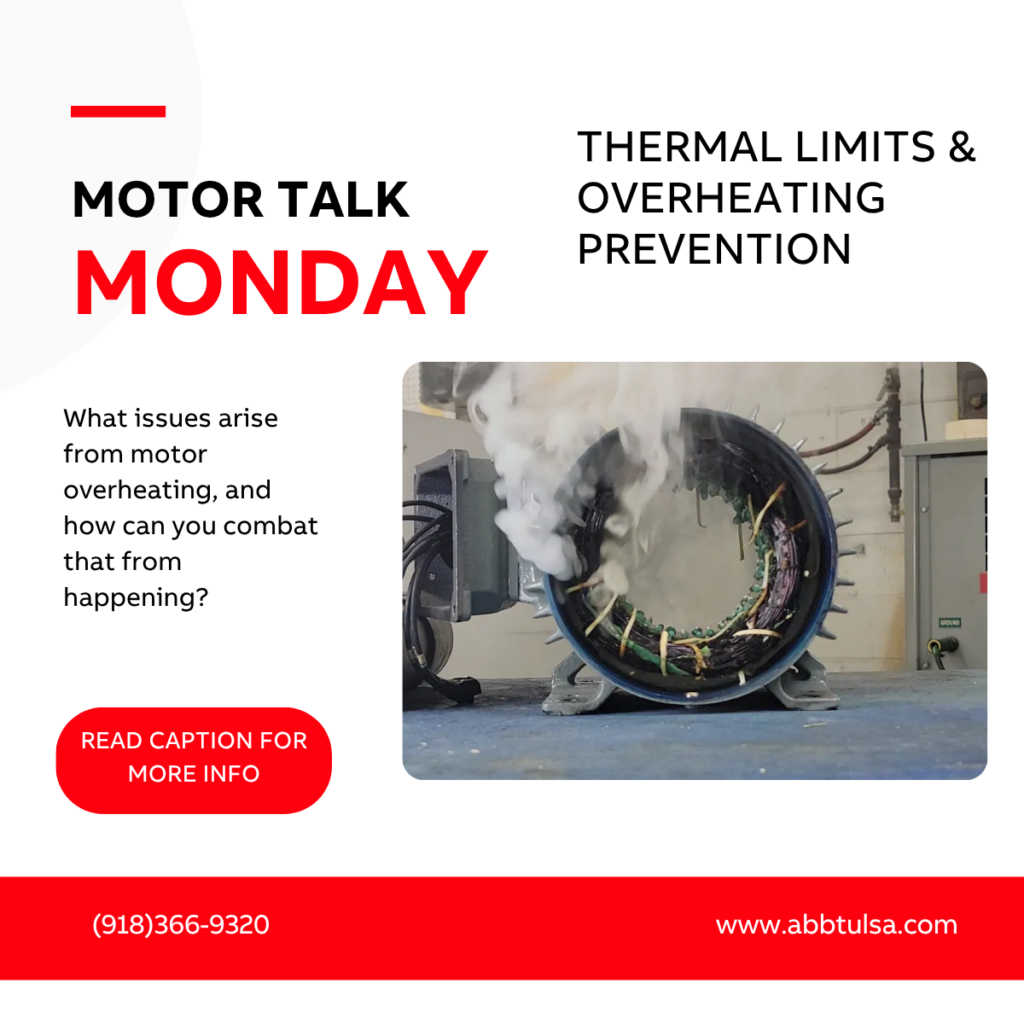
#MotorTalkMonday – Motor Thermal Limits & Overheating Prevention
Electric motors convert electrical energy into mechanical energy, but they also generate heat during operation. While some heat is expected, excessive temperatures can dramatically reduce motor life and increase the risk of unexpected failures.
Understanding motor thermal limits and proper cooling methods can help improve reliability, reduce maintenance costs, and maximize equipment uptime.
Why Motor Temperature Matters
Every motor is designed with an insulation system that can withstand a specific maximum operating temperature. As motor temperature increases, insulation materials begin to age more rapidly.
A commonly accepted industry guideline states that for every 10°C increase above the insulation system’s designed operating temperature, insulation life may be reduced by approximately 50%.
Excessive heat can also:
- Accelerate bearing lubricant breakdown
- Increase bearing wear
- Reduce motor efficiency
- Cause nuisance trips and shutdowns
- Lead to premature motor failure
Because of this, controlling operating temperature is one of the most important factors in maximizing motor life.
How Motors Stay Cool
Most industrial motors rely on air cooling to remove heat generated during operation.
Common cooling methods include:
External Fan Cooling
Many TEFC motors use a shaft-mounted fan that moves air across the motor frame. This airflow helps transfer heat away from internal components and maintain safe operating temperatures.
Internal Airflow Design
Motor manufacturers carefully design internal airflow paths to improve heat transfer from the windings and core to the motor frame.
Liquid Cooling
Some high-power or specialized applications use liquid cooling systems. These systems can remove heat more efficiently than air cooling and are often found in applications with high power density requirements.
Common Causes of Overheating
Several factors can cause motor temperatures to rise above normal levels:
- Overloading the motor
- High ambient temperatures
- Blocked ventilation openings
- Dirty cooling fins or fan covers
- Improper voltage conditions
- Frequent starts and stops
- Bearing problems
- Misalignment or mechanical issues
Identifying these problems early can prevent costly failures and unplanned downtime.
Protecting Motor Life
Routine inspections and temperature monitoring can help detect issues before they become serious. Infrared inspections, thermal sensors, and condition monitoring devices can provide valuable insight into motor health.
Keeping motors clean, maintaining proper airflow, and ensuring motors are correctly sized for the application are simple steps that can significantly improve reliability.
Heat is unavoidable in motor operation, but excessive heat is not. By understanding thermal limits and addressing overheating conditions early, facilities can extend motor life, improve performance, and reduce maintenance costs.
Great content! Keep up the good work!