#MotorTalkMonday - high inertia loadA high inertia load means the driven equipment resists changes in speed because it has a large moment of inertia. In simple terms, it takes more…
#MotorTalkMonday - how temperature rise affects motor lifeDid you know that a motor’s insulation life can be reduced by half for every 10°C increase in operating temperature? That means even…
#MotorTalkMonday - NEMA frame suffixesWhen it comes to electric motors, the NEMA frame size tells you the physical dimensions, but the suffix adds important details about mounting, shaft, and enclosure…
#MotorTalkMonday induction motor slipHave you ever wondered why an induction motor never quite spins at the exact speed of its magnetic field? That difference is called slip, and it’s a…
#MotorTalkMonday - calculating shaft height via frame sizeDid you know that, for some motors, you can calculate the shaft height of a motor just by looking at its NEMA frame…
#MotorTalkMonday - UL listed vs. UL recognizedWhen it comes to hazardous location motors, understanding UL certification is key:• Division 1 motors must be UL Listed, meaning the entire motor is…
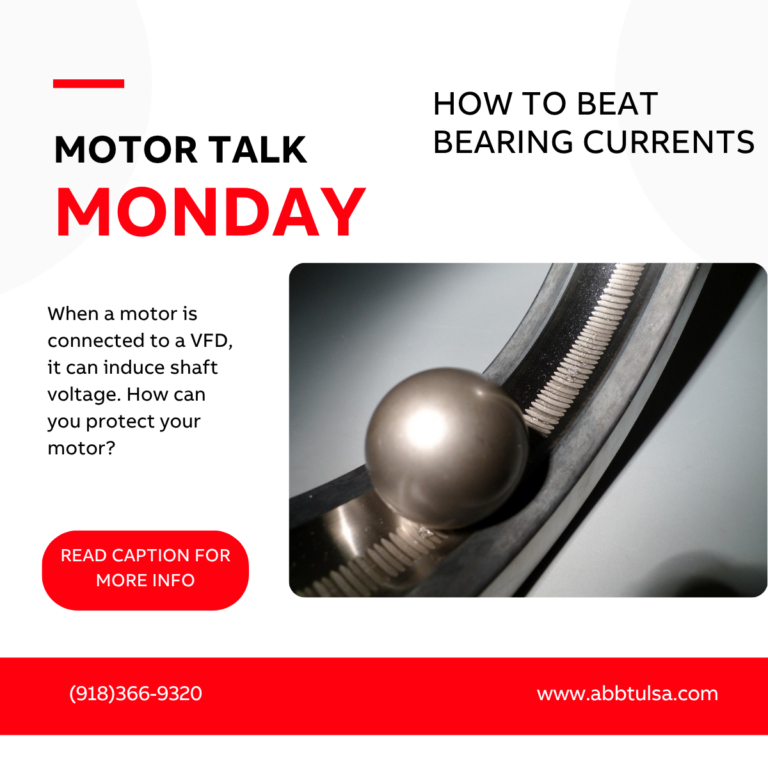
#MotorTalkMonday - shaft grounding brush & VFDWhy use a shaft grounding brush on an electric motor powered by a VFD?When an electric motor runs on a variable-frequency drive (VFD), it’s…
#MotorTalkMonday 50 vs. 60 HzEver wondered why electric motors are rated for 50 Hz in some regions and 60 Hz in others? It all comes down to regional standards, and…
#MotorTalkMonday - causes of motor overheatingYou smell a burning smell and realize it's coming from your motors, now what?Overheating is one of the most common issues affecting electric motors, and…
#MotorTalkMonday advantages of AC and DC motorsChoosing the right motor depends on your application. Here's a quick breakdown:DC Motors• High Starting Torque – Ideal for cranes, elevators, rolling mills• Precise…