#MotorTalkMonday – shaft grounding brush & VFD
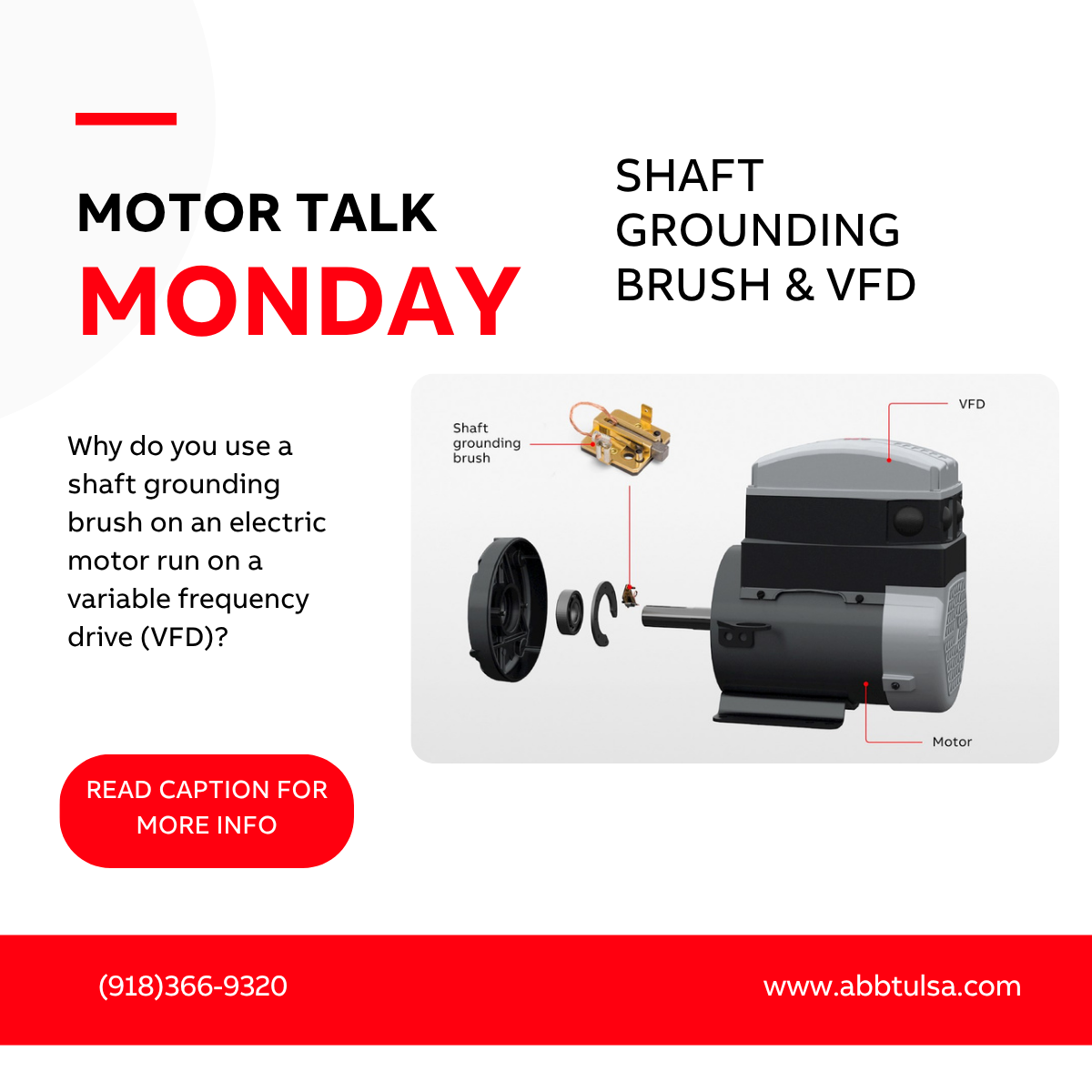
Why use a shaft grounding brush on an electric motor powered by a VFD?
When an electric motor runs on a variable-frequency drive (VFD), it’s exposed to high-frequency electrical currents that can damage the bearings. That’s where shaft grounding comes in.
Here’s why it matters:
1. VFDs generate high-frequency voltage
VFDs use pulse-width modulation (PWM) to switch voltage rapidly. This creates common-mode voltage between the stator and motor frame.
2. Shaft voltage builds up
The rotor and stator are separated by an air gap, acting like a capacitor. Voltage couples through this gap and builds up on the shaft.
3. Bearing damage risk
If the shaft voltage gets high enough, it discharges through the bearings—causing tiny sparks known as electric discharge machining (EDM). Over time, this leads to:
• Fluting or pitting
• Premature bearing failure
• Increased vibration and noise
4. Shaft grounding protects the motor
A grounding ring or brush gives the current a safe path to ground, bypassing the bearings and preventing damage.
5. Often paired with insulated bearings
Motors may have insulated bearings on one end and grounding on the other—ensuring no harmful current flows through the shaft.
Bottom line:
Shaft grounding systems help extend motor life and reduce maintenance by protecting bearings from high-frequency currents caused by VFDs.
#ABB #ABBMotors #ABBBaldorReliance #EngineeredToOutrun #Outrun