#MotorTalkMonday – why does a TEFC motor need a fan?
If a motor is totally enclosed, why does it still need a fan?
It sounds a little contradictory, but the answer is right in the name. TEFC stands for Totally Enclosed Fan Cooled, and both parts describe important features of the motor.
What Does “Totally Enclosed” Mean?
A totally enclosed motor is designed to limit the free exchange of air between the inside and outside of the motor. However, “totally enclosed” does not mean that the motor is airtight or that it does not require cooling.
Like other electric motors, a TEFC motor generates heat while operating. That heat needs to be transferred away so the motor can operate within its designed temperature limits.
If you’re trying to determine what type of enclosure a motor has, the nameplate is a good place to start. Check out our Motor Talk Monday – Reading a NEMA Nameplate for more information about the details you can find there.
So, What Does the Fan Do?
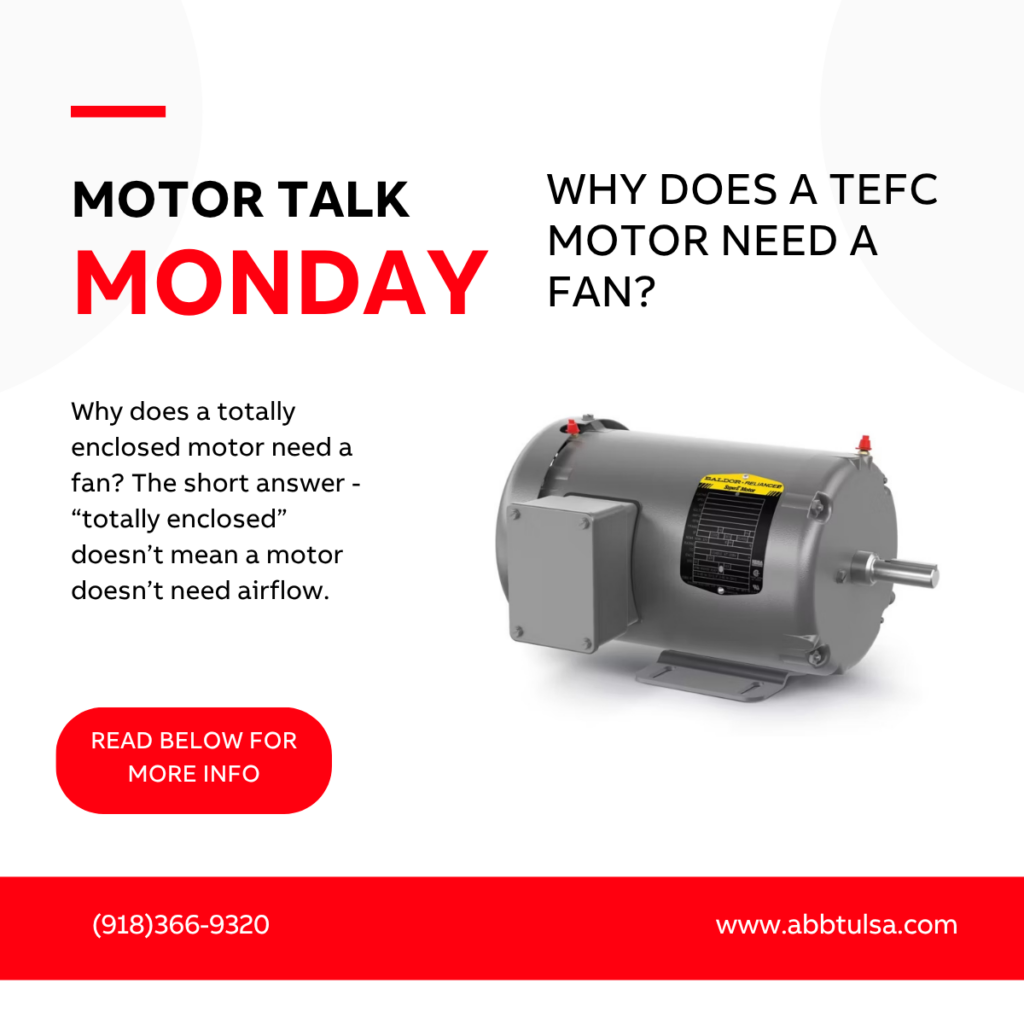
On a TEFC motor, the fan is located outside the enclosed portion of the motor. As the motor operates, heat transfers through the motor frame. The external fan moves ambient air across the exterior surfaces of the motor, helping carry that heat away.
The fins commonly found on the outside of a TEFC motor provide additional surface area for heat transfer, while the fan provides airflow across those surfaces.
In other words, the fan does not blow outside air through the inside of the motor. Instead, it helps cool the motor from the outside.
Why Airflow Matters
Because external airflow is part of the TEFC motor’s cooling design, it is important not to block it.
Dirt and debris can accumulate around the motor and its cooling surfaces over time. Equipment or other obstructions placed too close to the fan inlet can also interfere with airflow.
Keeping the fan cover, air inlet, and exterior cooling surfaces clear helps the motor’s cooling system work as designed.
This is particularly important in environments where dust, dirt, or other contaminants can build up quickly. Regular inspections can help identify blocked cooling paths before they contribute to overheating problems.
Not Every Motor Cools the Same Way
TEFC is only one motor enclosure and cooling design. Other motors may use open ventilation, air supplied by the driven equipment, natural convection, water cooling, or another method depending on the motor and application.
For example, a Totally Enclosed Air Over (TEAO) motor relies on airflow supplied by the equipment it is installed in rather than its own external cooling fan. That makes proper motor selection especially important. The cooling method must match the application and operating environment.
The Bottom Line
The “totally enclosed” part of TEFC protects the motor’s internal components by limiting the free exchange of air with the surrounding environment. The “fan cooled” part helps manage the heat produced during operation.
That external fan may seem simple, but it is an important part of the motor’s cooling system. Keeping the fan inlet and external cooling surfaces clean and unobstructed can help the motor operate as designed.
Have questions about choosing the right motor enclosure for your application? Contact the ABB District Office of Tulsa. Our team can help you find the right motor for your needs.