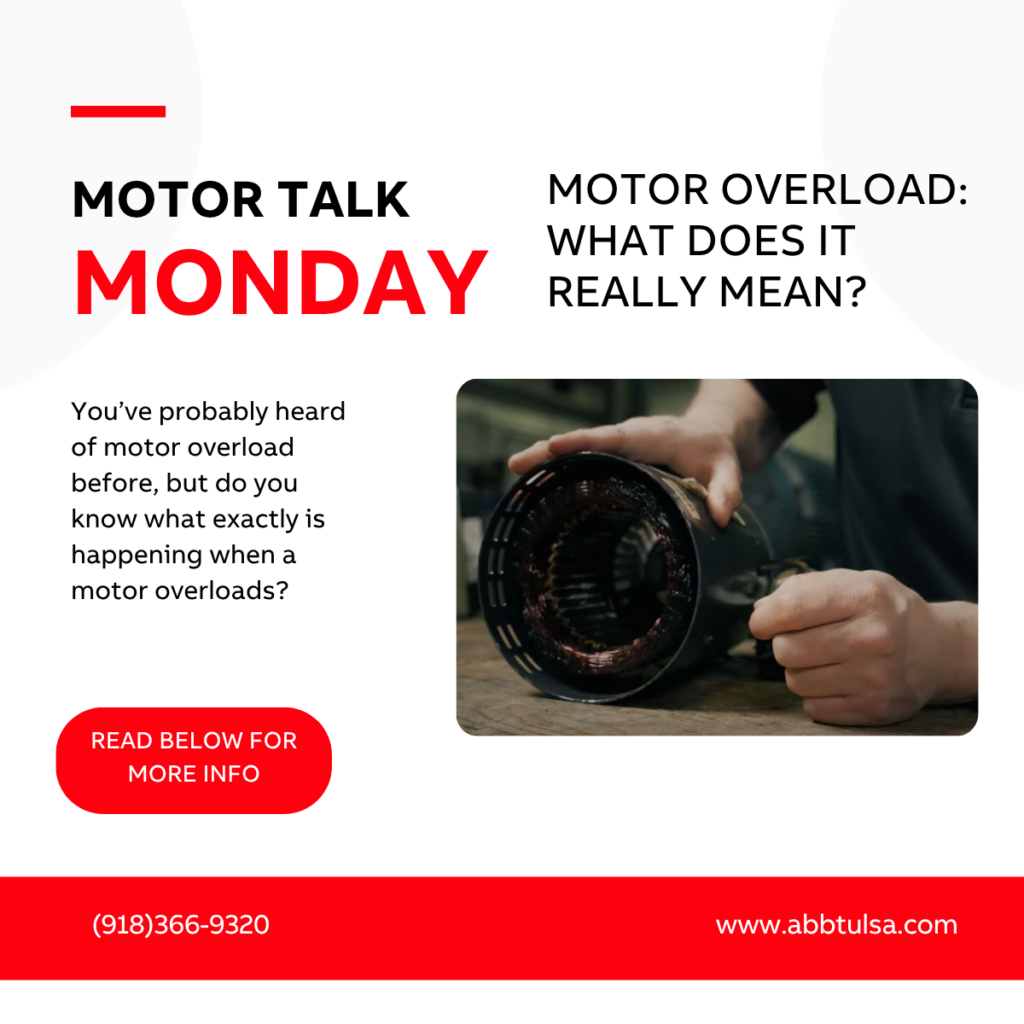
#MotorTalkMonday – Motor Overload: What Does It Really Mean?
When you hear that an electric motor is overloaded, you might picture too much physical weight being placed on the motor shaft. In reality, motor overload is broader than that.
An overload occurs when a motor is required to operate beyond the load it can safely sustain based on its rating and operating conditions. If that condition continues, the additional heat generated within the motor can shorten its life and eventually lead to failure.
So, what causes a motor overload, and what should you look for?
What Happens When a Motor Is Overloaded?
An electric motor converts electrical energy into the mechanical torque needed to drive a load. As the mechanical load on the motor increases, the motor generally draws more current to produce the additional torque.
If the required load becomes excessive and continues for too long, the increased current can create additional heat in the motor windings. Excessive temperature can accelerate insulation deterioration and ultimately reduce motor life.
That is why motor overload isn’t just a performance issue. It can become a reliability issue as well.
What Can Cause Motor Overload?
Motor overload can have several potential causes, including:
- Excessive mechanical load
- Binding or jammed driven equipment
- Changes in a process that increase the required load
- Improper motor sizing for the application
- Mechanical problems within the driven system
- Operating conditions outside the motor’s rating
Because there are multiple possible causes, an overload trip does not automatically tell you exactly what is wrong. Instead, it tells you that the motor and application should be investigated.
Overload Protection Matters
Motor overload protection is designed to help protect a motor against sustained overload conditions that could result in excessive heating.
This is different from protection against a short circuit. A short circuit typically involves a very high level of current that requires rapid protection. An overload can be much less dramatic, but it may persist long enough to create damaging heat.
If overload protection repeatedly trips, don’t treat the trip itself as the problem. Repeated trips can be an indication that something within the motor, driven equipment, application, or operating conditions needs attention.
What About Service Factor?
Service factor is another important part of the conversation.
For motors with a service factor greater than 1.0, the nameplate indicates an allowable service factor under specified conditions. However, service factor should not be treated as a reason to routinely select an undersized motor or ignore an overloaded application.
Always refer to the motor nameplate, manufacturer recommendations, and requirements of the specific application when determining appropriate loading.
Signs Worth Investigating
Depending on the application, possible indications of an overload condition can include higher-than-expected motor current, excessive temperature, repeated overload trips, or changes in the performance of the driven equipment.
Rather than repeatedly resetting an overload device, determine why the motor is experiencing the condition.
Is the driven equipment binding? Has the process changed? Is the motor properly sized? Are the motor’s operating conditions within its rating?
Finding the cause can help prevent a recurring problem from becoming premature motor failure.
Protect the Motor by Understanding the Load
A properly selected motor should be matched to the demands of its application. Understanding the load, monitoring operating conditions, and responding to repeated overload trips can help protect the motor and improve long-term reliability.
When in doubt, start with the motor nameplate and the requirements of the application. Those details can tell you a lot about what the motor was designed to handle.