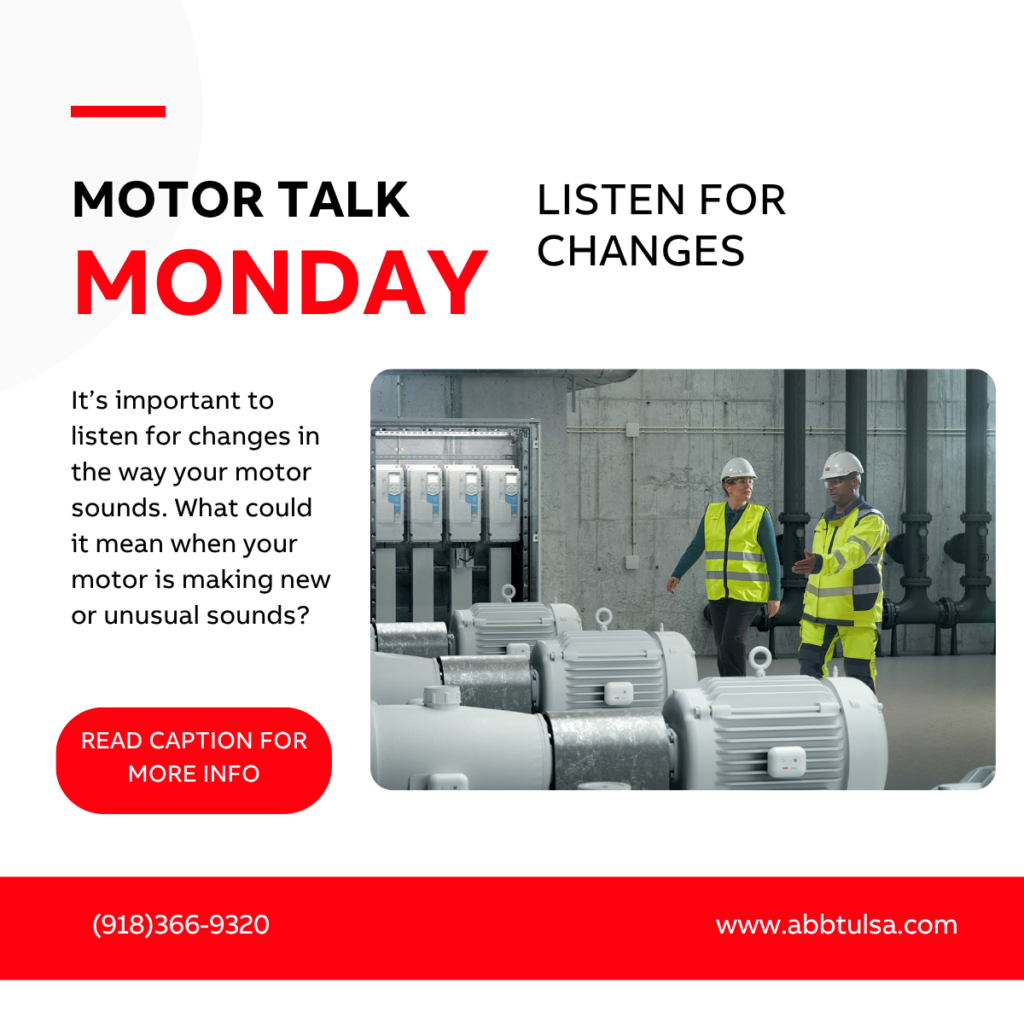
#MotorTalkMonday – Listen for Changes
One of the easiest ways to catch a motor problem early is simply to listen.
Electric motors don’t usually fail without warning. In many cases, they provide subtle clues that something is changing long before a failure occurs. One of the most overlooked warning signs is a change in sound.
Knowing what “normal” sounds like for your equipment makes it much easier to recognize when something isn’t right.
Every motor has its own normal sound
Depending on the application, you may hear airflow from the cooling fan, a low electrical hum, or other normal operating sounds. These noises are expected and can vary from one motor to another.
The important thing isn’t whether a motor makes noise. It’s whether that noise changes. A new or unusual sound can indicate that a component is wearing, becoming loose, or operating under abnormal conditions.
Sounds worth investigating
If you notice any of the following, it’s a good idea to take a closer look:
- Grinding or squealing
- Knocking or rattling
- Buzzing that’s louder than normal
- Changes in pitch or overall operating noise
- Unusual vibration accompanied by noise
While these sounds don’t automatically identify the exact problem, they can indicate that further inspection is needed.
What could these sounds mean?
Changes in motor noise can be associated with several common issues, including:
- Bearing wear or inadequate lubrication
- Loose mounting hardware or components
- Shaft misalignment
- Mechanical imbalance
- Electrical issues, such as voltage imbalance or single-phasing
- Contact between rotating and stationary parts
The sound alone won’t diagnose the problem, but it can provide an early warning that something has changed.
Make listening part of routine inspections
Operators and maintenance personnel are often the first to notice when equipment sounds different.
During routine walk-throughs, take a moment to listen as well as look. Pairing sound with visual inspections, vibration monitoring, and temperature checks can help identify developing issues before they lead to unexpected downtime.
The Bottom Line
Your ears are one of the simplest predictive maintenance tools you have.
Knowing what your motor normally sounds like makes it easier to recognize changes that could indicate a developing problem. Investigating unusual noises early may help extend motor life, improve reliability, and reduce the likelihood of costly repairs.
Frequently Asked Questions
Should electric motors make noise?
Yes. Most motors produce normal operating sounds, including airflow from the cooling fan and a low electrical hum. What matters most is whether those sounds change over time.
Does a noisy motor always mean it’s failing?
Not necessarily. However, a new or unusual sound should be investigated to determine whether maintenance or repairs are needed.
What should I do if my motor starts making a different noise?
Compare the sound to normal operation, check for obvious issues such as loose hardware or blocked ventilation, and have the motor inspected if the noise persists or is accompanied by excessive vibration, heat, or reduced performance.