Motor Talk Monday – Motor Connections: A Critical Link
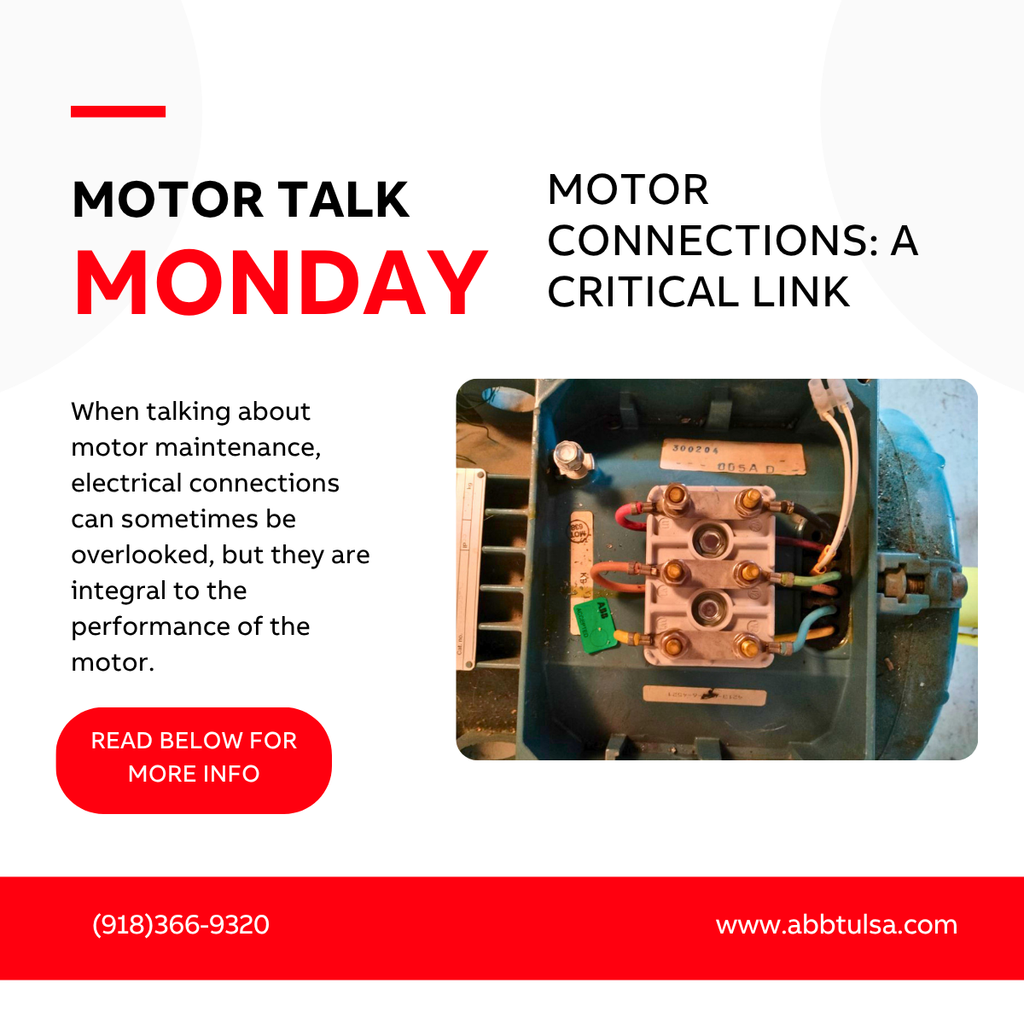
When it comes to electric motor maintenance, bearings, lubrication, and cooling systems often receive the most attention. However, one critical component of motor reliability can sometimes be overlooked: electrical connections.
Loose, damaged, or improperly installed electrical connections can cause significant problems, including overheating, electrical imbalances, and premature motor failure. Even a small connection issue can lead to costly repairs and unexpected downtime if left unaddressed.
Understanding how electrical connections affect motor performance and knowing what to look for during routine inspections can help keep motors operating safely and reliably.
How Electrical Connections Affect Motor Performance
Electric motors rely on a consistent electrical supply to operate efficiently. Connections at the motor terminals provide the electrical pathway between the incoming power supply and the motor windings.
When connections are properly installed and maintained, electrical current can flow through them with minimal resistance. However, loose, corroded, or damaged connections can introduce additional resistance at the connection point.
As resistance increases, so does the potential for heat generation. This localized heating can damage terminals, insulation, and surrounding components. In severe cases, deteriorating connections can result in arcing, electrical faults, or complete motor failure.
Poor connections can also contribute to voltage imbalance in three-phase motors. If a connection introduces a significant voltage drop on one phase, the resulting imbalance can cause uneven current distribution and additional heating in the motor windings.
Common Causes of Poor Motor Connections
Several factors can contribute to electrical connection problems over time, including:
- Vibration: Normal motor operation can expose electrical connections to vibration, potentially contributing to loosening over time.
- Thermal Cycling: Repeated heating and cooling cause materials to expand and contract, which can affect connection integrity.
- Corrosion and Oxidation: Moisture, contaminants, and harsh operating environments can deteriorate electrical contact surfaces and increase resistance.
- Improper Installation: Connections that are not tightened to the manufacturer’s recommended torque specifications may loosen or become damaged.
- Aging Components: Over time, terminals, connectors, and insulation can deteriorate, increasing the likelihood of electrical problems.
These issues may develop gradually, making routine inspections an important part of preventative motor maintenance.
Warning Signs of Connection Problems
Identifying connection issues early can help prevent more serious motor damage. During routine maintenance, qualified personnel should inspect motor terminals, wiring, and connections for signs of deterioration.
Common warning signs include:
- Discoloration or Burn Marks: Darkened terminals or surrounding materials may indicate excessive heat.
- Damaged Insulation: Cracked, brittle, or melted insulation can indicate overheating or deterioration.
- Corrosion: Visible oxidation or corrosion around terminals can interfere with electrical conductivity.
- Loose Connections: Improperly secured terminals or connectors can increase electrical resistance and create unreliable contact.
- Unusual Odors: A burning smell near electrical connections may indicate overheating or insulation damage.
Some connection problems may not produce obvious visual warning signs. During operation, qualified personnel may use appropriate diagnostic methods, such as thermal imaging, to identify abnormal heating at electrical connections.
Best Practices for Maintaining Motor Connections
Regular inspections and proper maintenance can help reduce the risk of connection-related motor failures.
1. Inspect Connections Regularly
Include motor terminals, wiring, and electrical connections in routine preventative maintenance inspections. Look for signs of overheating, corrosion, damaged insulation, or other visible deterioration.
2. Follow Proper Torque Specifications
Electrical connections should be tightened according to the motor manufacturer’s specifications. Both undertightening and overtightening can cause problems. Loose connections may increase resistance, while excessive torque can damage terminals or connection hardware.
3. Keep Connections Clean and Protected
Moisture, dust, and other contaminants can contribute to corrosion and electrical deterioration. Ensure terminal boxes and enclosures are properly sealed and maintained according to the motor’s environmental requirements.
4. Address Warning Signs Promptly
Discoloration, damaged insulation, or evidence of overheating should never be ignored. Investigating these issues early can help prevent more extensive damage.
5. Prioritize Electrical Safety
Electrical inspections and maintenance should only be performed by qualified personnel. Before accessing motor connections, follow appropriate lockout/tagout procedures, isolate all applicable power sources, and verify the absence of voltage using approved procedures and equipment.
Small Connections, Big Consequences
Electrical connections may seem like a small part of an electric motor, but they play an important role in its overall reliability.
A loose or deteriorating connection can create excessive heat, contribute to electrical imbalances, and eventually lead to unexpected motor failure. Fortunately, many connection-related issues can be identified through regular inspections and proper maintenance practices.
The bottom line? Maintaining secure, clean, and properly installed electrical connections is a simple but important step toward improving motor reliability, preventing unexpected downtime, and extending equipment life.