
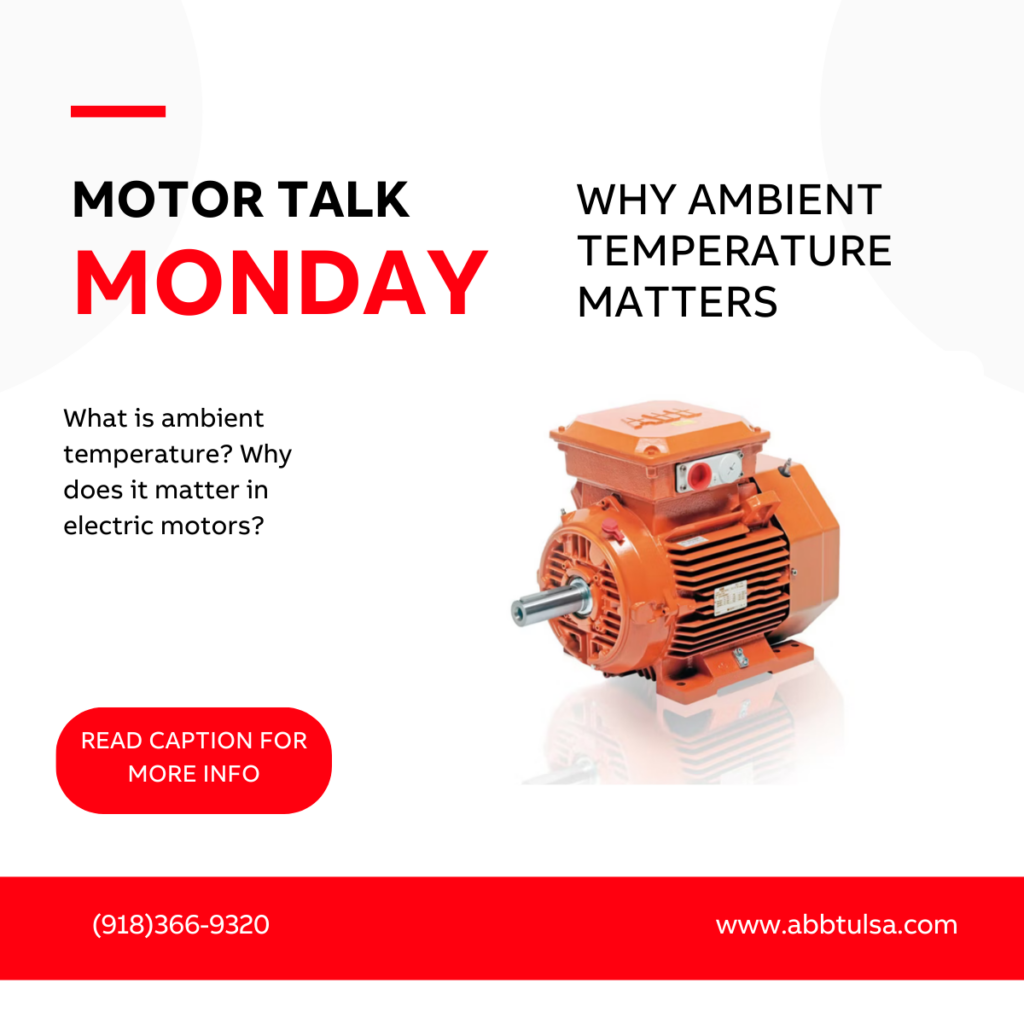
#MotorTalkMonday – why ambient temperature matters
Ambient temperature plays a major role in how electric motors perform and how long they last. Most industrial motors are designed with a maximum ambient temperature of 40°C (104°F) in mind. When the surrounding air exceeds that limit, the motor cannot dissipate heat as effectively, which can push internal temperatures beyond the insulation system’s rating.
Excess heat accelerates insulation aging, reduces motor life, and can eventually lead to winding failure. In high-temperature environments, it is important to confirm that the motor’s service factor, insulation class, and cooling method are appropriate for the conditions.
A few key things to keep in mind:
• Standard rating: Most motors are designed for a 40°C ambient environment.
• Higher ambient areas: Steel mills, foundries, compressor houses, and outdoor summer conditions can easily exceed this limit.
• Cooling matters: Proper airflow, clean cooling passages, and unobstructed fans help maintain safe operating temperatures.
• Motor selection: High ambient applications may require special insulation systems, derating, or motors specifically designed for elevated temperatures.
Understanding the ambient conditions around your equipment helps ensure you select the right motor and avoid unnecessary overheating.