
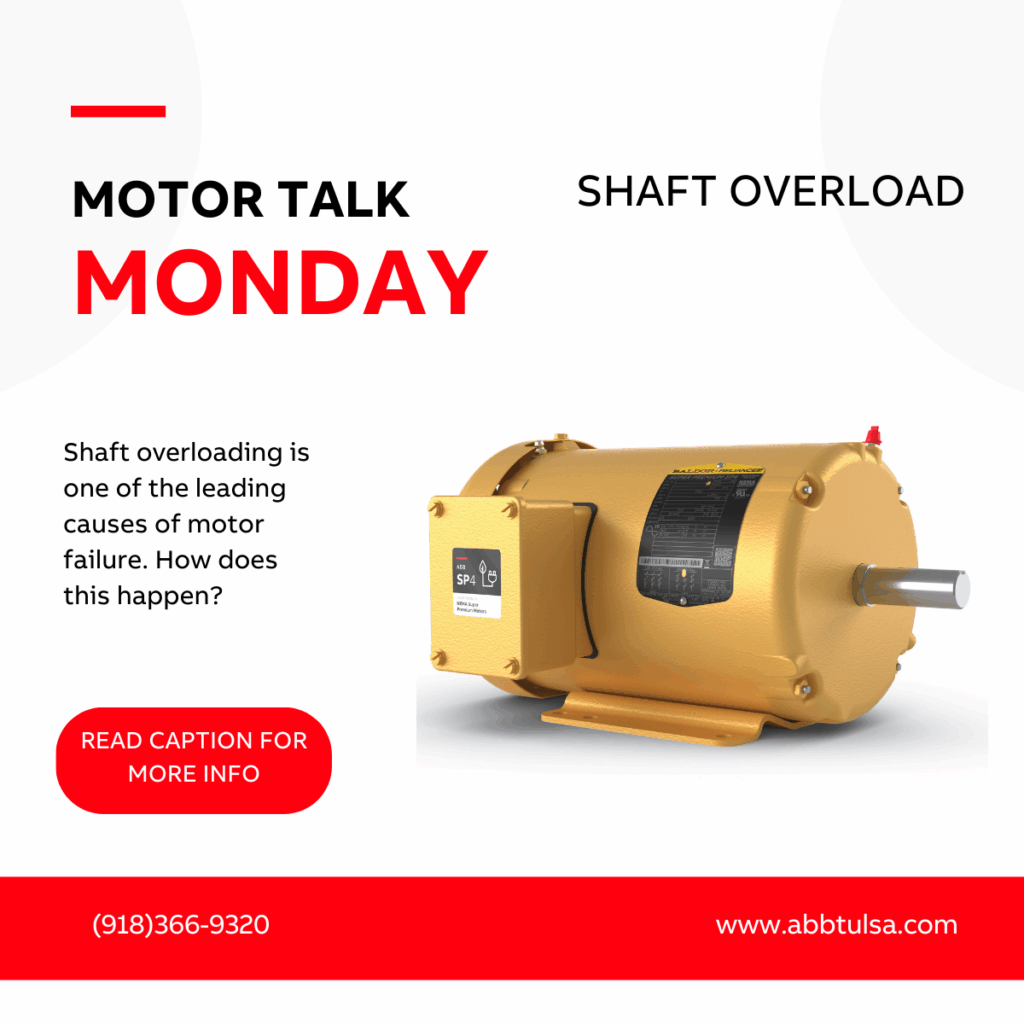
#MotorTalkMonday – shaft overload
Shaft overload is one of the leading causes of motor failure, but how exactly does this happen and what can be done to prevent this?
There are a few factors that can cause shaft overload, including:
• Excessive Load Torque – The motor is asked to drive a load heavier than it’s rated for, which increases stress on the shaft.
• Misalignment – Misalignment between the motor and equipment causes uneven load distribution and excessive bending on the shaft.
• Imbalance in Rotating Components – Imbalanced rotors, couplings, or pulleys can produce vibrations and radial forces on the shaft.
• Improper Mounting or Installation – If the motor isn’t mounted correctly, or the base isn’t level, it can cause shaft distortion and stress.
• Drive Belt Tension Issues – Over-tightened belts can put excessive side loads on the motor shaft.
There are a few ways you can combat shaft overload in your motors. First and foremost, it is important to make sure you are choosing a motor with adequate torque and horsepower for the application. It is also important to ensure that the motor is properly aligned and mounted, and that all rotating components are balanced. Be sure to follow the manufacturer’s guide for belt tension and perform regular maintenance as well.
Continual monitoring of motors helps combat some of these issues as well. The ABB Ability™ Smart Sensor, and easily installed, wireless sensor, collects data such as vibration and motor load that can help to give an early warning, detecting issues early and minimizing unplanned downtime.
Interested in learning more? Give us a call today! (918)366-9320
#ABBMotors #EngineeredToOutrun #Outrun