#MotorTalkMonday – high inertia load
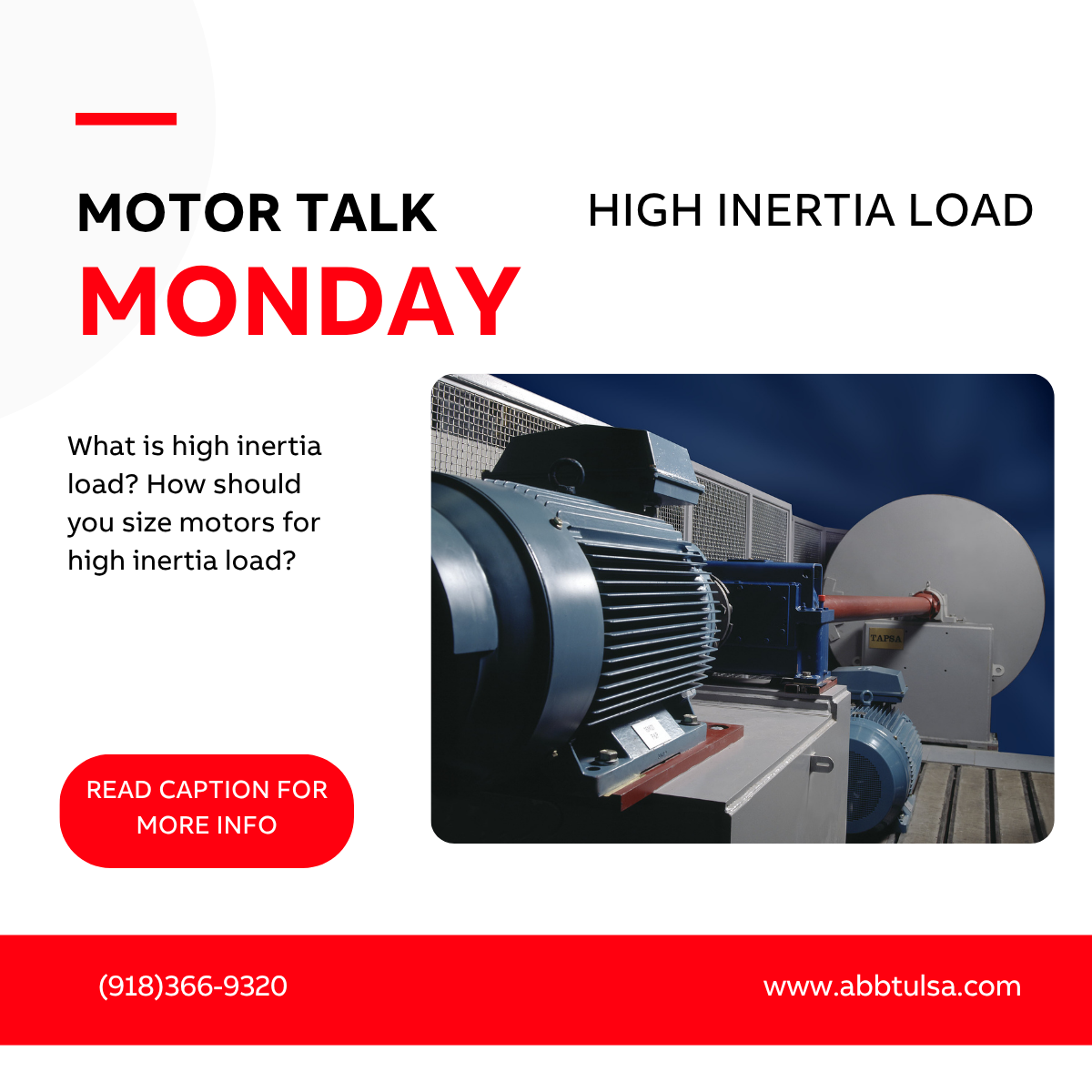
A high inertia load means the driven equipment resists changes in speed because it has a large moment of inertia. In simple terms, it takes more time and energy to accelerate or decelerate (think large fans, centrifuges, or crushers).
Why it matters:
• Longer Acceleration Time – The motor must deliver torque for an extended period.
• Higher Starting Current – Because the motor stays in the acceleration phase longer, it draws high current for more time.
• Thermal Stress – Prolonged high current can overheat the motor if it’s not properly sized.
Key considerations for sizing high inertia loads:
• Torque Capability: Choose a motor with sufficient pull-up and breakdown torque to handle the load during acceleration.
• Service Factor: Don’t rely on service factor for continuous operation, size the motor for the actual load.
• Design Letter: For hard-to-start loads, consider NEMA Design C or D motors, which provide higher starting torque.
• Starting Method: Use soft starters or VFDs to control acceleration and reduce electrical and mechanical stress.
• Thermal Capacity: Motors must withstand extended inrush current without exceeding temperature limits.
What’s the most challenging high inertia application you’ve worked on? Share your experience below!
#ABB #ABBMotors #EngineeredToOutrun #Outrun