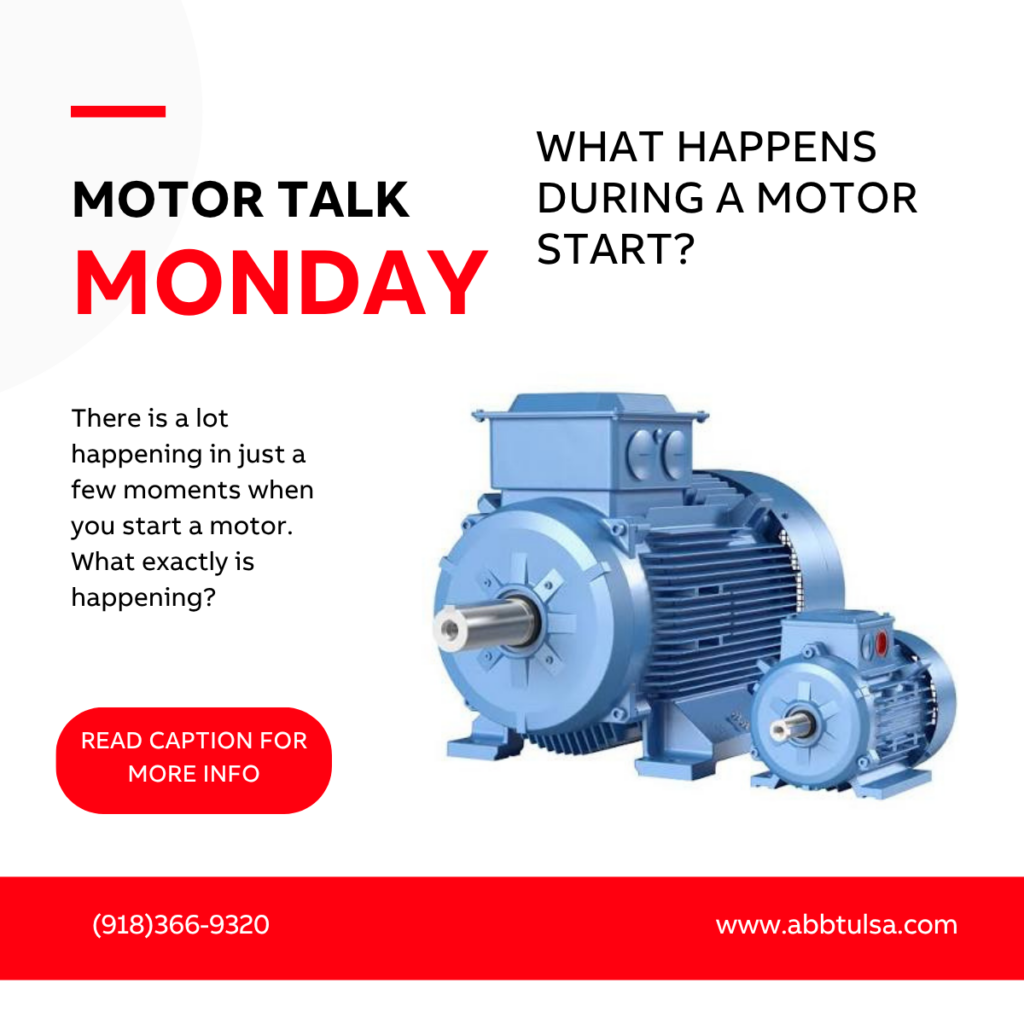
#MotorTalkMonday – What Happens During a Motor Start?
When a motor starts, it experiences some of the highest electrical and mechanical stresses it will see during normal operation.
Although startup may only last a few seconds, understanding what happens during this period can help users make better decisions about motor selection, operation, and maintenance.
High Inrush Current
One of the first things that occurs during startup is a large increase in current draw. A typical squirrel-cage induction motor started across the line may draw approximately 6-8 times its full load current until it begins accelerating toward rated speed.
This temporary surge is known as inrush current or locked rotor current.
As the motor accelerates, current gradually decreases until it reaches normal operating levels.
Producing Starting Torque
At startup, the motor must generate enough torque to overcome inertia and accelerate the driven equipment. The amount of required starting torque depends on the application.
For example:
- Centrifugal pumps and fans typically require lower starting torque.
- Conveyors, crushers, and high-inertia loads often require higher starting torque.
If the motor cannot develop sufficient torque, it may struggle to accelerate or fail to reach operating speed.
Heat Generation During Startup
High current draw creates heat within the motor windings. While motors are designed to withstand normal startup conditions, repeated starts increase thermal stress and can contribute to insulation aging over time.
This is one reason manufacturers often specify a maximum number of starts per hour for certain motor designs and applications.
Why Frequent Starts Matter
Every startup cycle places electrical and mechanical stress on the motor.
Applications with frequent starts and stops may experience:
- Increased winding temperatures
- Reduced insulation life
- Higher mechanical stress on couplings and driven equipment
- Increased wear on starting components
For demanding applications, engineers may consider alternatives such as soft starters or variable frequency drives (VFDs) to reduce startup stress.
Final Thoughts
Motor startup lasts only a few seconds, but it is one of the most important operating conditions to understand.
High current draw, starting torque requirements, and heat generation all occur during this brief period. Evaluating startup requirements can help improve reliability, reduce downtime, and support longer motor life.
At the ABB District Office of Tulsa, we help customers select motors for a wide variety of applications and operating conditions. Contact our team if you have questions about motor starting requirements or motor selection.