#MotorTalkMonday – how to beat bearing currents
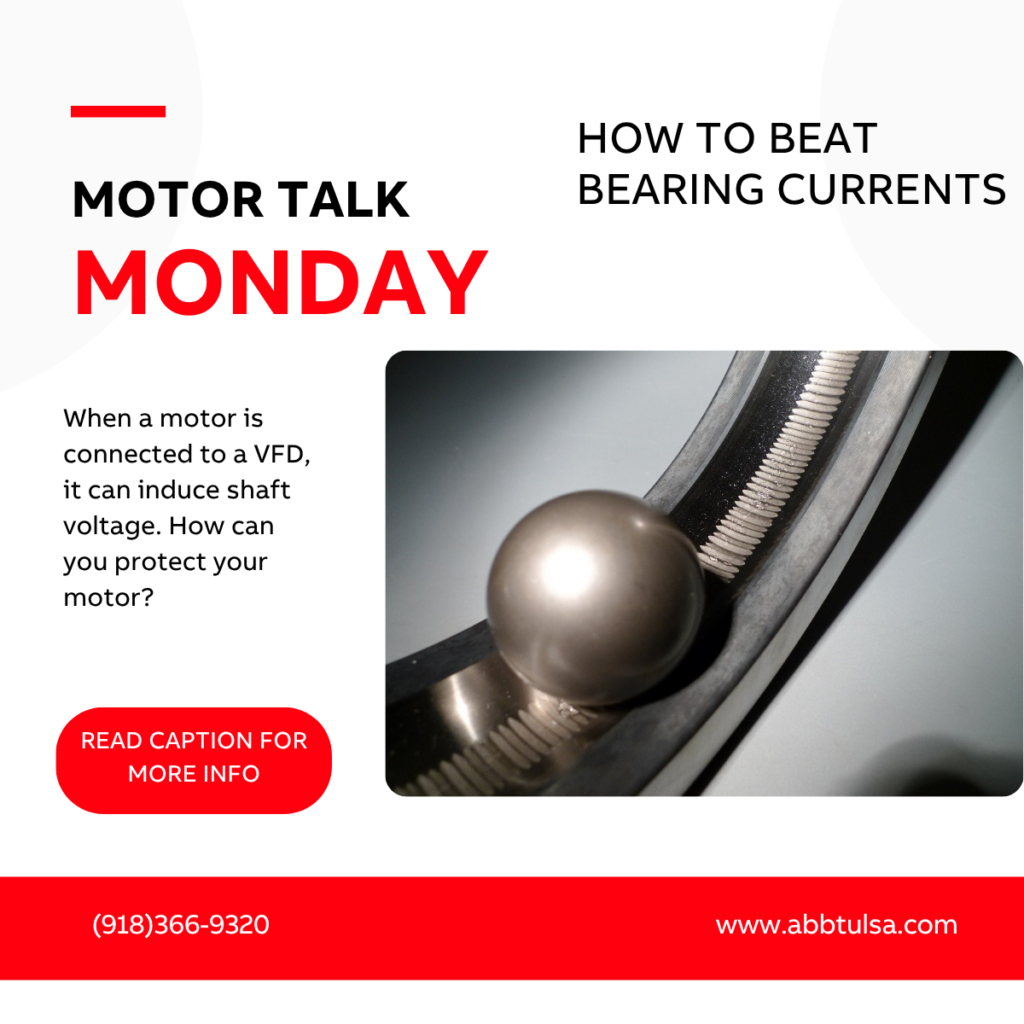
When a motor is connected to a VFD, high-frequency switching can induce shaft voltage. If that voltage discharges through the bearings, it can lead to:
• Electrical pitting
• Fluting (that “washboard” pattern on bearing races)
• Premature bearing failure
So how do we protect the motor?
Option 1: NDE insulated bearing (most common)
This approach helps break the circulating current path by insulating the non-drive end (NDE) bearing.
Pros:
• Cost-effective
• Widely accepted standard practice
• Works well for most applications
Cons:
• Does not eliminate all shaft voltage
• Some current may still discharge through the drive end (DE) bearing
Option 2: both bearings insulated
Here, both bearings are insulated to fully isolate the rotor from the frame.
Pros:
• Maximum protection from circulating currents
• Reduces risk in high-frequency or long cable VFD setups
Cons:
• Shaft voltage still exists—it just finds another path
• Potential discharge through couplings, gearboxes, or driven equipment
• Higher cost
In many applications, a shaft grounding device (ring or brush) is added to provide a controlled path for shaft voltage to safely discharge—helping protect bearings and other connected equipment.
Bottom line: Insulating bearings helps interrupt current paths, but it doesn’t eliminate shaft voltage. The best solution depends on the application, and in some cases, adding shaft grounding can further reduce risk.
If you’re seeing premature bearing failures on VFD-driven motors, it may be time to take a closer look at your mitigation strategy. For more information, click here or give us a call today.
#ABB #ABBMotors #BearingCurrents #EngineeredToOutrun #Outrun