#MotorTalkMonday – causes of motor failure
Motor failures often feel sudden. Production stops, the line goes down, and everyone wants answers.
In reality, most premature failures are preventable.
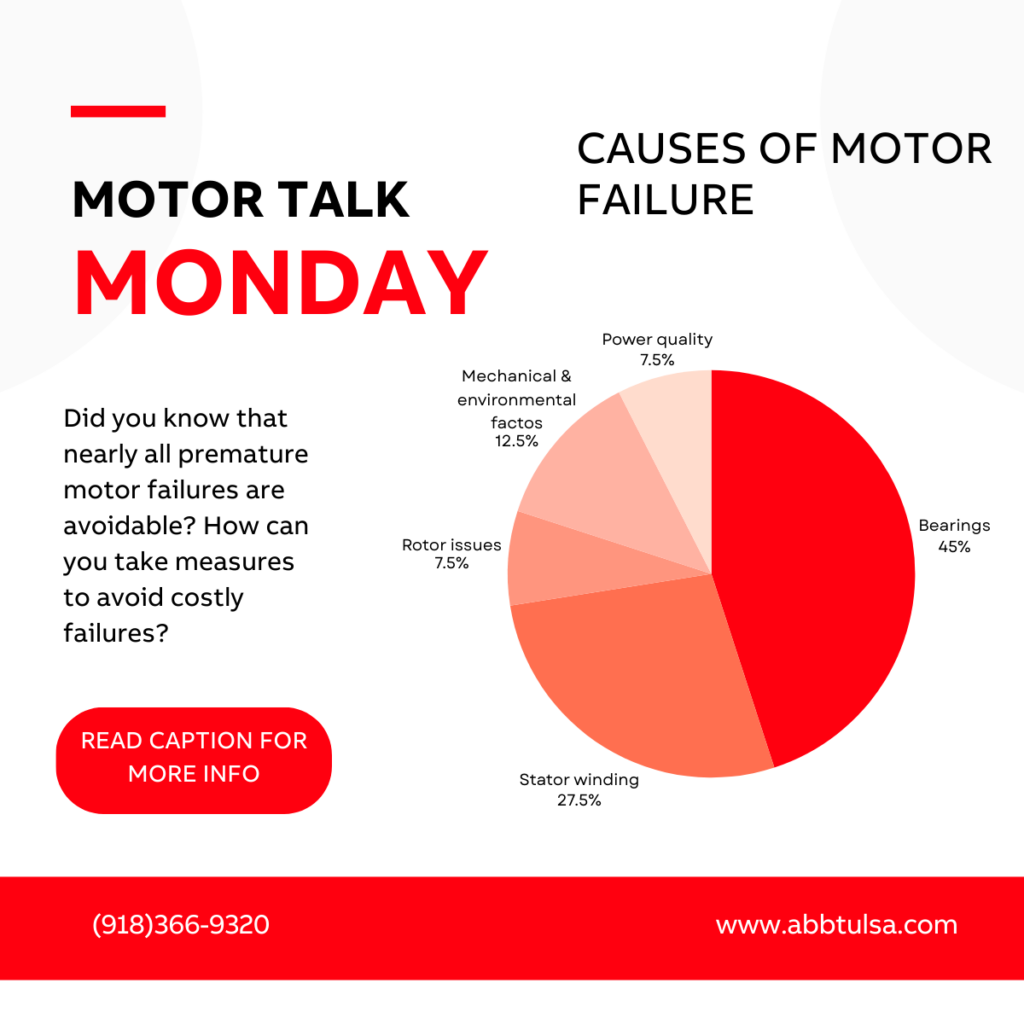
However, with a disciplined motor management program, facilities can dramatically reduce downtime, extend motor life, and lower total cost of ownership. Let’s look at how AC motor failures (480 V through 13.8 kV) typically break down.
Bearing failures (40-50%)
Bearings remain the number-one weak point in electric motors. Common causes include:
- Contamination
- Improper lubrication
- Misalignment
- Excessive load
- Electrical discharge machining (EDM) in VFD-driven motors
Preventive steps include:
- Following structured lubrication schedules
- Using sealed bearings where appropriate
- Installing shaft grounding devices on VFD applications
- Performing alignment checks during installation
Small oversights in lubrication or alignment often lead to major failures.
Stator winding failures (25-30%)
Winding failures are typically driven by overheating, insulation breakdown, and contamination. Contributors include:
- Voltage imbalance
- Overload conditions
- Restricted cooling airflow
Prevention strategies include:
- Monitoring current imbalance
- Performing routine megohmmeter and polarization index testing
- Keeping motors clean
- Ensuring ventilation paths remain unobstructed
Electrical testing often identifies insulation degradation long before failure occurs.
Rotor issues (5-10%)
Broken rotor bars or end rings most often appear in high starting-torque applications. These faults are difficult to detect visually, but they can be identified through:
- Motor current signature analysis (MCSA)
- Vibration testing
Early detection prevents extended downtime and secondary damage.
Mechanical and environmental factors (10-15%)
Improper installation and harsh operating environments accelerate failure. Common contributors:
- Misalignment
- Incorrect belt tension
- Foundation looseness
- Dust, moisture, and chemical exposure
Proper installation practices, environmental protection, and condition monitoring provide strong defense.
Power quality issues (5-10%)
Harmonics, voltage dips, and surges place stress on both insulation systems and bearings. Mitigation options include:
- Surge protection
- Harmonic filters
- Robust insulation systems
Power quality is often overlooked until repeated failures occur.
The common thread? Prevention!
Nearly all premature motor failures are preventable with a structured motor management program.
Routine inspections, vibration monitoring, alignment checks, electrical testing, proper spare storage, regular test runs, and documented maintenance procedures close the loop.
A motor can last 30 years if treated properly — or fail in three months if neglected.
Preventive maintenance almost always pays for itself in avoided downtime, emergency labor, and replacement costs.
If you’d like help building a more disciplined motor management strategy, our team at ABB District Office of Tulsa is here to help.