#MotorTalkMonday – why motor mounting matters
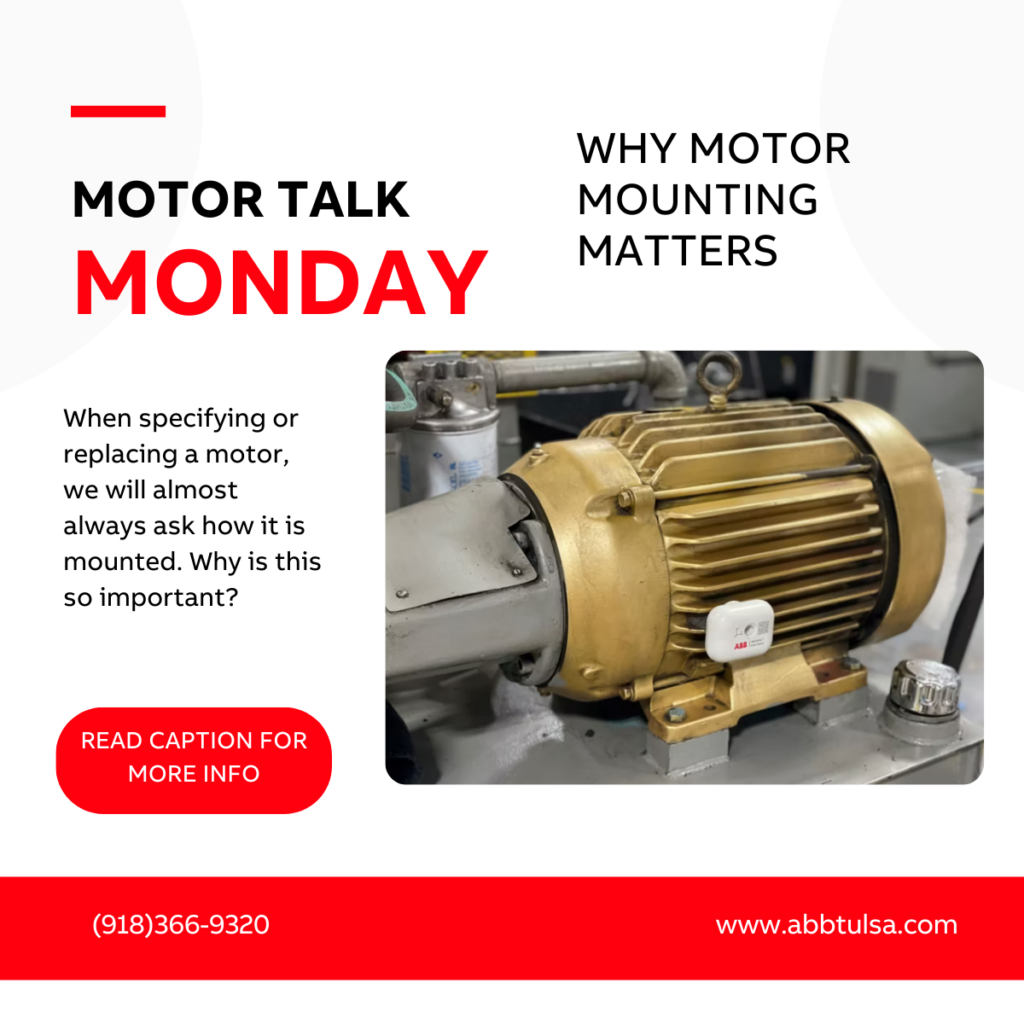
When specifying or replacing an electric motor, mounting is often treated as a secondary detail, but in reality, how a motor is mounted plays a major role in performance, reliability, and long-term operating life.
Motor mounting affects everything from load handling and alignment to vibration control and moisture management. Overlooking these factors can lead to premature wear, unexpected failures, and costly downtime.
Electric motors are designed for specific mounting orientations, such as foot-mounted, flange-mounted, horizontal, or vertical installations. Each configuration is engineered to support particular load types and installation constraints.
If a motor is installed in an orientation it was not designed for, it can create misalignment issues, increase vibration, and place unnecessary stress on bearings and shafts. Over time, these issues reduce efficiency and shorten motor life.
Mounting orientation also directly affects how moisture exits the motor. Most motors are equipped with drain and breather plugs to allow condensation to escape. These components rely on gravity to work properly. If a motor is mounted incorrectly, condensate can collect inside the housing instead of draining out. Trapped moisture increases the risk of corrosion, insulation degradation, and electrical failures. This is especially critical in washdown environments, outdoor installations, or facilities with high humidity or temperature swings.
Incorrect mounting doesn’t always cause immediate failure. In many cases, it quietly accelerates wear until a motor fails sooner than expected. When downtime occurs, the root cause is often traced back to an installation detail that seemed minor at the time.
By understanding how a motor is mounted—and why—it becomes easier to:
- Extend motor service life
- Reduce unplanned downtime
- Improve overall reliability
- Avoid repeat failures
Before selecting or replacing a motor, it’s important to confirm:
- The existing mounting configuration
- The required shaft orientation
- Whether the application introduces axial or radial loads
- Proper drain and breather plug placement for the environment
Taking a few minutes to verify these details can prevent long-term issues and ensure the motor performs as intended.
Motor mounting is more than a mechanical detail. It directly affects performance, drainage, and reliability. Getting it right from the start helps protect your equipment and keeps operations running smoothly.
If you’re unsure whether your motor is mounted correctly for its application, addressing that question early can save time, cost, and frustration down the line.