#MotorTalkMonday – “sticksion” and why it matters
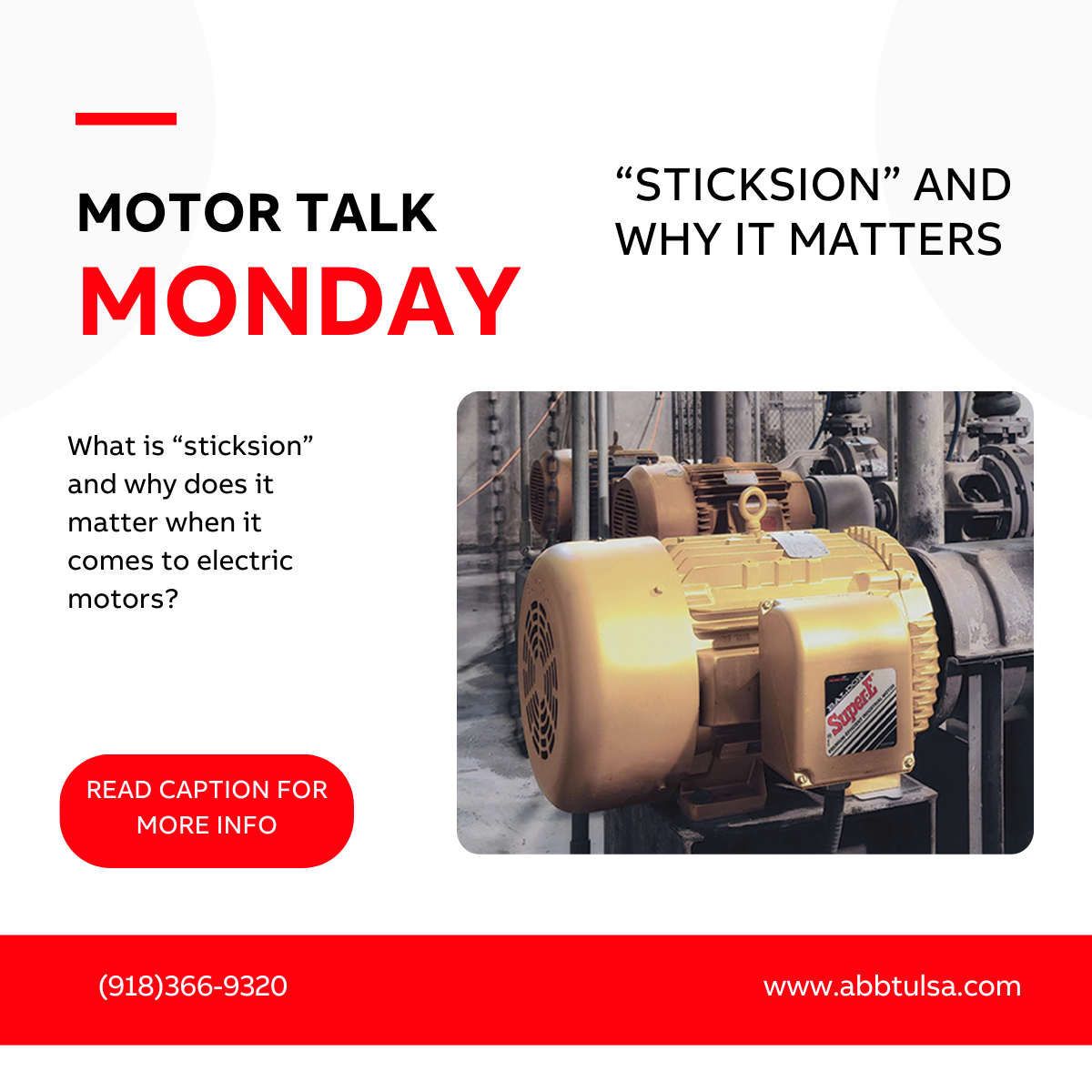
Have you ever heard the term “sticksion”? It’s a concept introduced in the Cowern Papers (linked below) to describe the torque required to break a load loose and make the first revolution of a motor shaft.
Think of it as the real-world breakaway torque. It’s not just overcoming internal friction, but also the load’s resistance after sitting idle.
Examples include:
• A conveyor belt that’s been stationary for hours.
• A pump with fluid adhesion or seal drag.
A non-motor related example is one you might deal with on a regular basis—trying to open a jar, especially one that’s been sitting in the pantry for a while. At first, it feels stuck, but you apply more force (or ask someone who can apply more force) until suddenly the lid breaks loose and starts turning. That extra force you needed? That’s sticksion in action.
Bringing it back to electric motors, if your motor’s starting torque is less than the sticksion torque, the motor won’t start the load. This is why engineers often size motors with sticksion in mind, especially for applications with heavy or sticky loads.
Want to learn more about sticksion? Check out the Cowern Papers (linked below) starting on page 30.
https://abbmotionemea.showpad.com/share/ph5Ox077m4uJsEE99yySF
#ABB #ABBMotors #Sticksion #EngineeredToOutrun #Outrun